> For the complete documentation index, see [llms.txt](https://guide.lunabudgeting.com/llms.txt). Markdown versions of documentation pages are available by appending `.md` to page URLs; this page is available as [Markdown](https://guide.lunabudgeting.com/tips-and-tricks/using-luna-just-as-an-expense-tracker-no-budgeting.md).
# Using Luna just as an expense tracker (no budgeting)
You can actually turn budgeting off!
## Why would I turn off budgeting?
You can actually turn off budgeting in Luna if you don't need it.
Some people don't actually care setting limits/goals and hitting them but want to use Luna purely as an expense tracker. Just to keep an eye on how much they are spending.
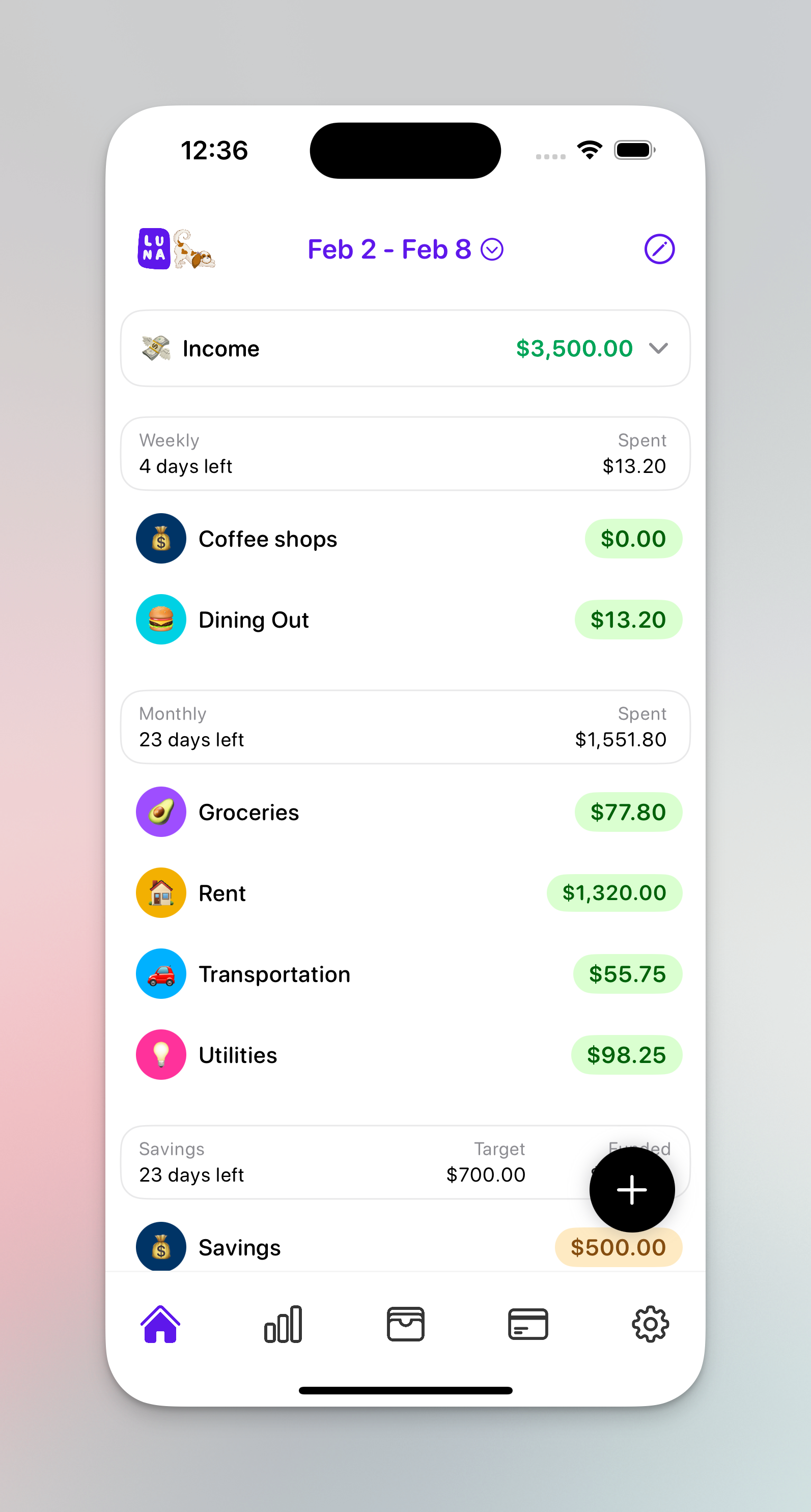
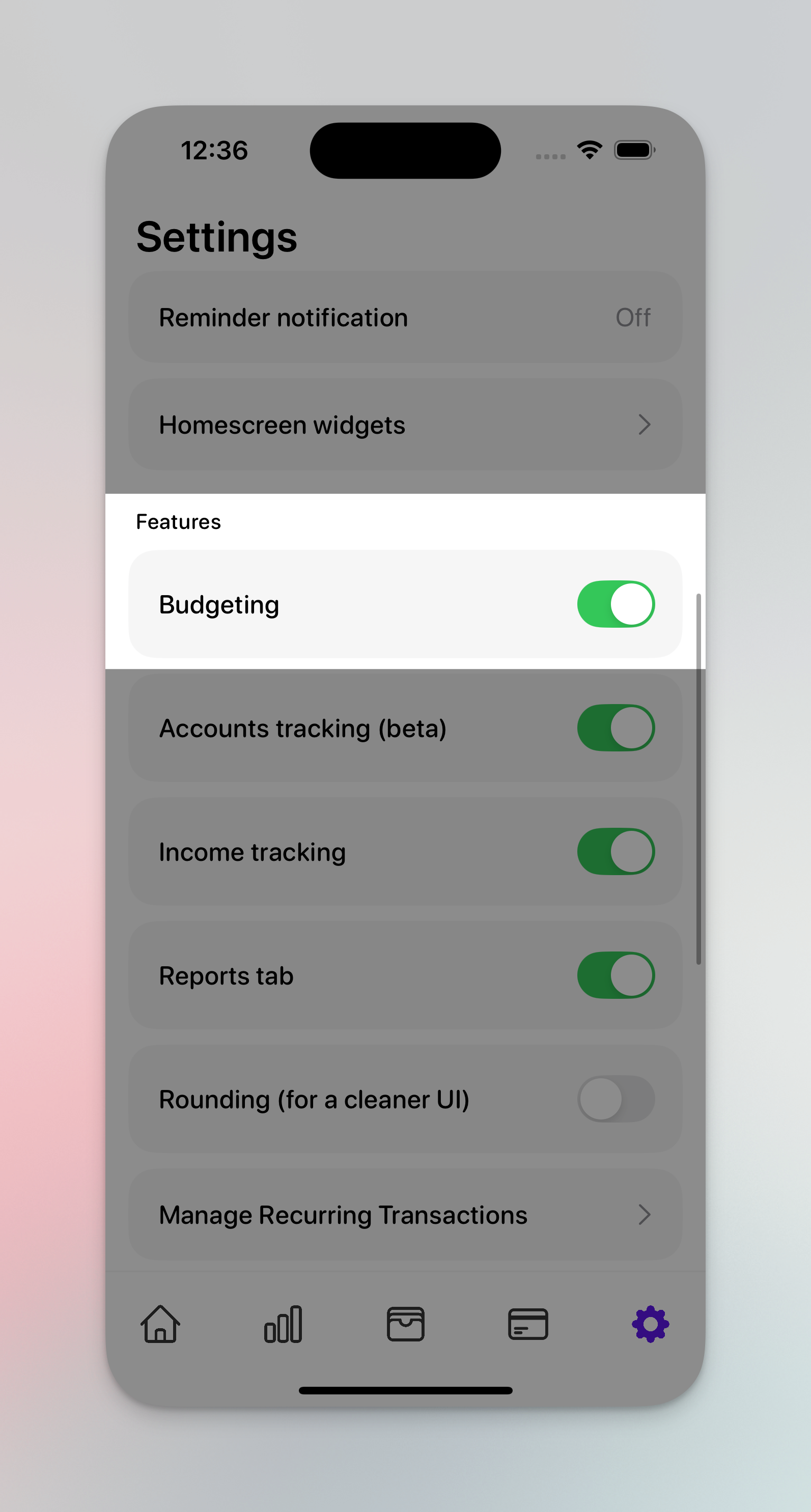
You can do this by turning off in settings. Doing this will remove the "Left" and "Funded" column on the homescreen and remove the "target" amount when creating a category.
{% hint style="info" %}
Turning this on/off will not delete any data. It simply hides it from the interface and you can turn it back on whenever you want
{% endhint %}
Luna homescreen without budgeting
Turn off budgeting in the settings page
## When should I turn off budgeting?
If you get overwhelmed with constraints or are comfortable keeping the budget in your head, you can turn it off.
By turning off budgeting, the interface gets simpler and you can be even more focused when using the app.